Plastic, paper, reusable. What kind of bag should you choose?
Plastic bags are derived from petroleum. Petroleum is a finite resource, and as it becomes increasingly limited, obtaining it becomes increasingly damaging to the environment. It is estimated that about 12 million barrels of oil are used in making the plastic bags used in the US annually. Majority of plastic bags end up as deadly waste in landfills and the ocean because people don’t dispose of them responsibly. Birds often mistake shredded plastic bags for food, filling their stomachs with toxic debris. For hungry sea turtles, it’s nearly impossible to distinguish between jellyfish and floating plastic shopping bags. Fish eat thousands of tons of plastic a year, transferring it up the food chain to bigger fish, marine mammals, and humans.
Are paper bags a better alternative?
What about paper bags? Many studies find that paper bags are actually worse for the environment. It takes more than 4 times the energy to manufacture a paper bag than it does a plastic bag. They require cutting down and processing trees (14 million trees are cut down to produce the 10 billion paper grocery bags used by Americans each year), which involves lots of water, toxic chemicals, fuel, and heavy machinery.
So what should we use?
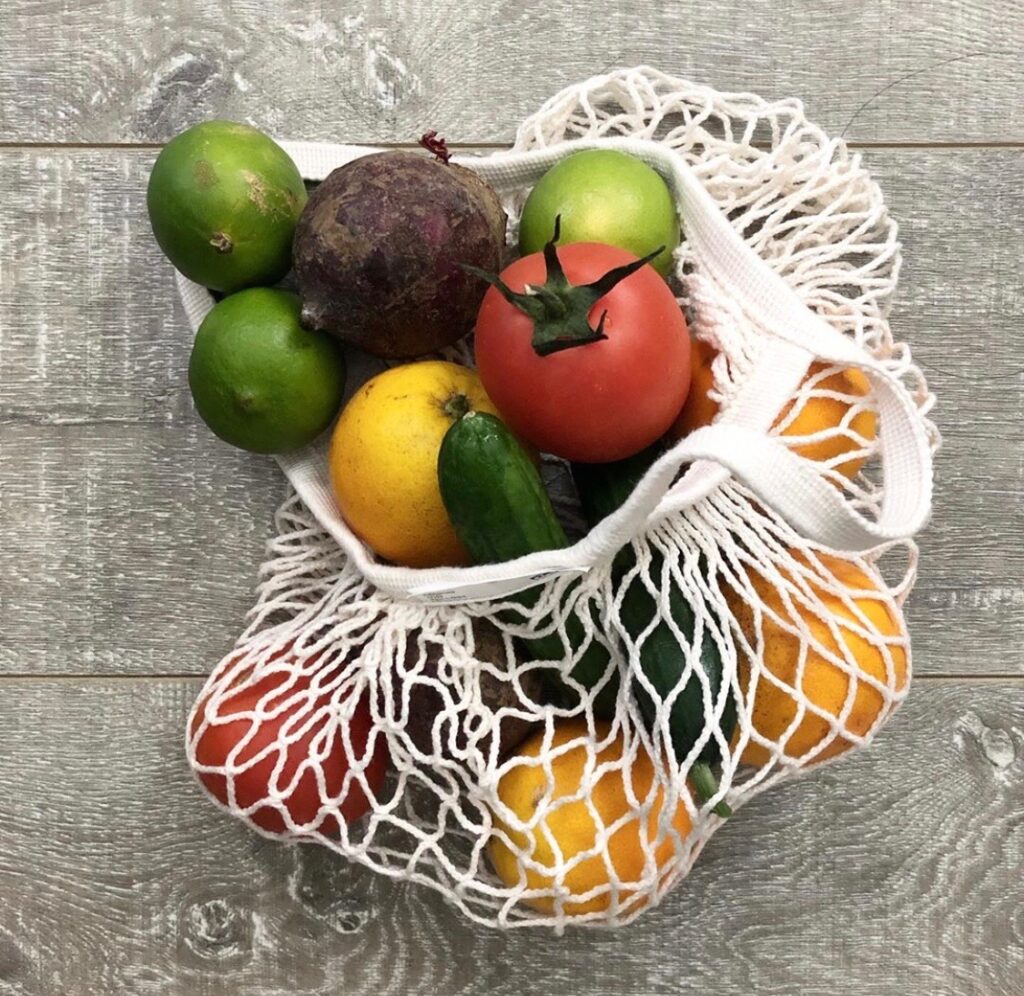
Reusable cotton bags are a good option, but you have to be committed to using them. This goes for both shopping bags and produce bags. Choose organic cotton whenever possible and only get as many as you need. Remember, going zero waste isn’t about going out and buying everything. After all, minimalism is a part of being more sustainable.