
The 5 R’s of the zero waste movement
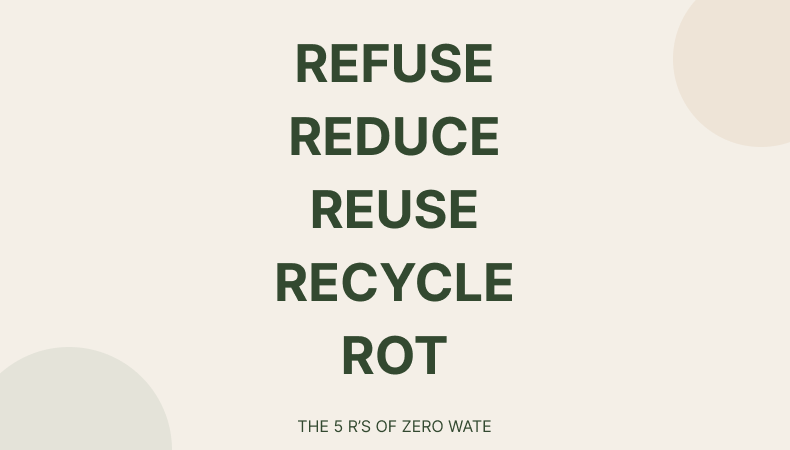
Practice the 5 R’s | Refuse, Reduce, Reuse (and Repair), Recycle, Rot (compost)
Zero Waste starts by refusing things. Next, use whatever you still have to reduce and save resources. Then, substitute disposables for reusable options, and instead of tossing things repair them. After that, separate what little trash you have left and make sure to recycle. Finally, compost what’s left and let it rot.
Refuse
Refusing will help you eliminate a lot of waste from the very beginning. Learn to say no and look into reusable alternatives. Say no to produce wrapped in plastic. Buying in big supermarkets often mean more packaging so shopping at the farmer’s market or at small local stores is a better option. Say no to freebies like pens or swag bags, unless you’re in need of one. Say no to disposables! BYO whenever possible. Say no to pamphlets, flyers, etc. Take out your phone and snap a photo instead. Say not to participating in unsustainable practices.
Reduce
Reducing your overall consumption by being mindful about what you need/want and buy. Don’t buy on impulse. The novelty and joy of having it wears out very quickly and then it’s just another item we have at home that doesn’t add any value to our life. This also cuts on down our consumption of natural resources and all the energy it takes to produce it in the first place. This will also help simplify your life.
Reuse and repair
Reusing and repairing go hand in hand. When you’re deciding whether to toss something and buy a new one, ask yourself if you can find a way to reuse or repair it. Reusing also means selling or donating your used items so they go to loving homes instead of the landfill. You can also reuse by buying second hand. You’ll save a lot of money and reuse something someone else didn’t want. Don’t forget a library card, which is a really great way to reuse books, music, and movies. Choose reusables because disposables are disposable, so you have to buy them over and over. Which means you keep spending money on things that you will throw away. Choose reusables to save yourself some money and the planet.
Recycle
Recycle. After you have refused, reduced, and reused there shouldn’t be much left to recycle. With the occasional items that need to be recycle, check the recycling process in your city and opt for materials that are easily recyclable. Look into TerraCycle for hard to cycle items. This will ensure that these resources can be reused instead of filling up our landfills.
Rot
Rot (compost). Don’t just throw your kitchen scraps away! Compost. You can keep a compost bin your backyard or keep your compost in a bucket in the freezer then drop it off at a local community center. You’ll save lots of waste and make a healthy, nutritious soil for plants.