I’m not bacon
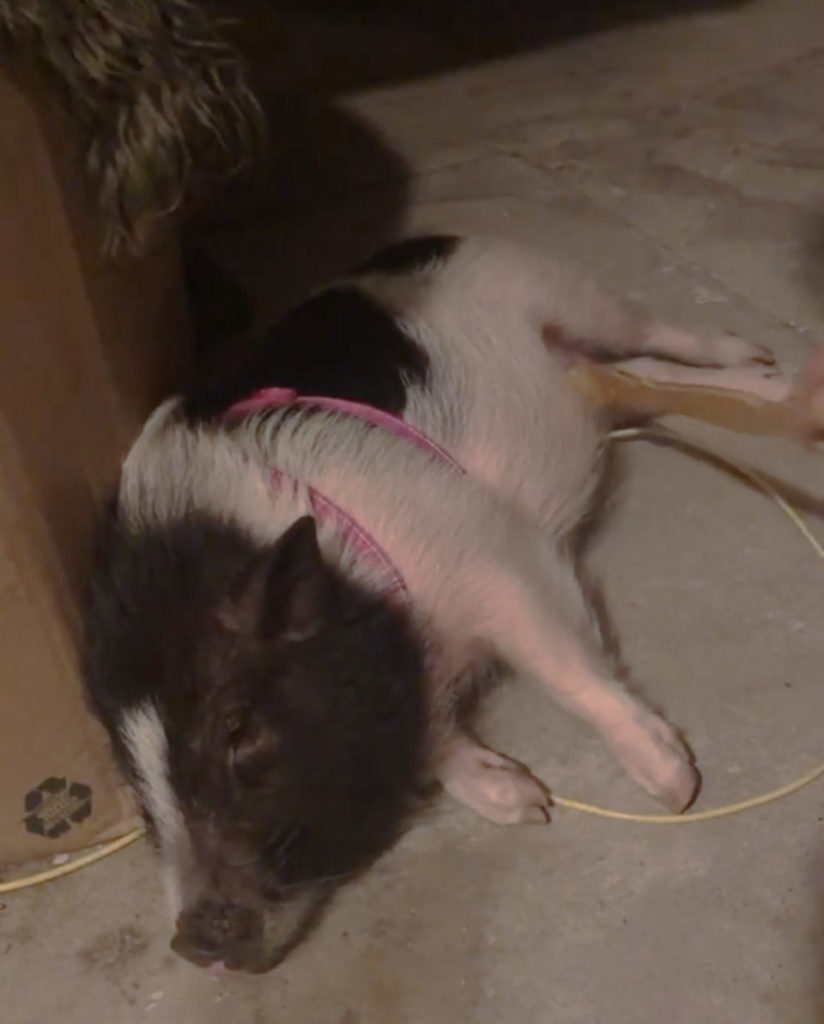
Not only are pigs super cute, they are considered the fifth most intelligent animal in the world (even more than dogs!). They also have excellent object-location memory. They like to play and can be manipulative with other pigs. And just like all sentient beings they feel pain and suffer. Despite all this, most pigs are kept in cruelty factory farms. Piglets are separated from their mothers when they are as young as 10 days old and once the piglets are gone the sow is impregnated again..and the cycle continues for three or four years before she is slaughtered. After the piglets are taken from their mothers, they are confined to pens and barns over the span of about six months, fed until they weigh upwards of 280 lbs and are ready to be sold as meat. These living conditions expose sows and piglets to stress-related behavior such as cannibalism and tail biting so farmers often chop off their tails and use pliers to break off the ends of their teeth – with no painkillers! 121 million of these social, intelligent, playful souls are killed for food each year.
According to the EPA, animal agriculture is the number one source of pollution and is responsible for more GHG than all of the world’s transportation systems combined. Of all agricultural land in the US, 87% is used to raise animals for food. About 269 million acres of US forest have been cleared to create crop land to produce feed for these animals. The meat industry is directly responsible for 85% of all soil erosion in the US. A typical pig factory generates the same amount of raw waste as a city of 12,000 people. Roughly 2 of every 5 tons of grain produced in the world is fed to livestock, poultry, and fish. A plant-based diet could reduce an individual’s carbon footprint from food by up to 73%. Many scientists believe that it is the single biggest way to reduce our impact on the planet..not just GHG, but global acidification, eutrophication, land and water use. It is bigger than cutting down on our flights and buying an electric car.