
Should swimming with whale sharks in Oslob be banned?
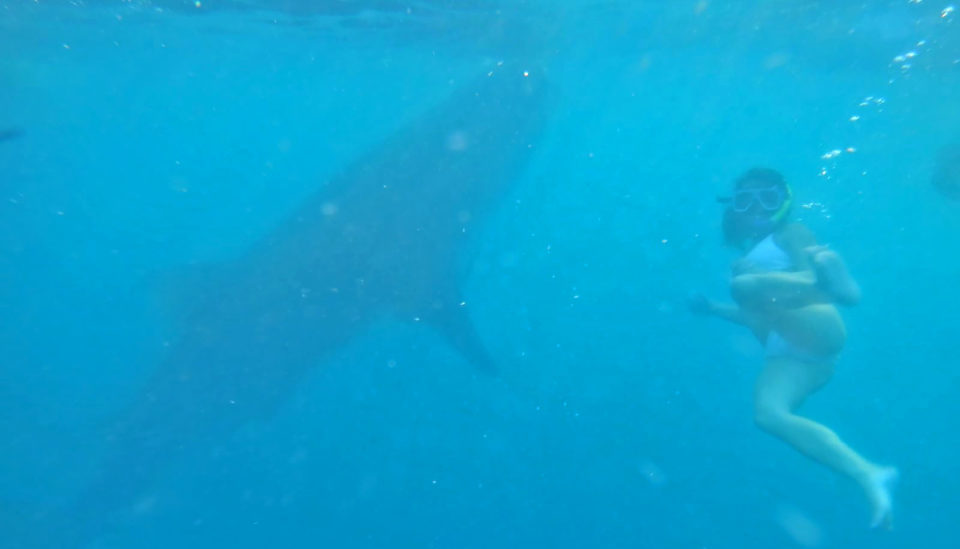 When I was in Cebu, Philippines both locals and tourists told me that one of the main attractions is swimming with whale sharks, and not to worry because 100% of the time they will show up. These enormous filter feeder fish are hand-fed, and this essentially guarantees they will show up to thrill tourists.
Cebu, particularly Oslob, has become a tourism hotspot fueled by the year-round presence of whale sharks along the local shallow reef. This unusual aggregation is maintained by the local tour operators who feed the sharks krill. The krill is a less diverse mix of planktonic creatures than what the sharks would naturally consume. It’s not junk food, but it’s not necessarily a healthy diet either. Losing out on some of the key nutrients that they gain from foraging naturally could affect their growth and reproduction down the line.
Why this operation is potentially detrimental to the sharks species
Due to the feeding, whale sharks associate boats with free food, and that connection could lead them into danger elsewhere (ie approaching motorized boats and getting injured, approaching a shark-fishing vessel and getting captured). Other potentially long-term impacts include behavioral change and displacement from critical habitats. By enticing the whale sharks to stay in one spot, with daily feeding, it is interfering with their natural movements and migration pattern. Marine biologists predict this could alter their breeding habits and ultimately their reproduction. Whale sharks are globally endangered and their numbers in the Philippines region are in steep decline, any risks with reproduction is detrimental.
How locals are benefiting from this operation
On the other hand, Oslob is one of the poorest fishing sites in the world and fishermen turned tour operators have lifted the community out of poverty by running this operation. Those who used to travel to Cebu City (about 3 hrs away by bus) for work can now work locally and stay home with their families, and make more money. A number of scientists now claim that this unique business model has improved food security, healthcare, and education in the community while safeguarding the sharks from being illegally poached and finned alive (through the employment of sea wardens to protect the coastal region from poachers and fishermen who use destructive fishing practices). Historically, food security in the area has been an issue due to years of overfishing and the destruction of coral reefs.
What we can do as tourists
I’m not here to tell you one way or another, but I want more tourists to become aware of all the facts. Asking tourists to suddenly stop visiting Oslob would be disastrous for both the community and the sharks. What we should do is share this information and put pressure on tour operators and local authorities to regulate the practice more closely, to ensure the safety of the whale sharks. As conscious travelers we can make changes and hopefully both the whale sharks and the villagers can benefit.
I’d love to be able to experience these majestic animals in their up close and natural habitat but I chose not to swim with them when I was in Oslob. The photo here is courtesy of my friend, Nicole Shano, who experienced this operation first hand. Here’s her story:
“We left Moalboal in a van, along with our guide, for the tour and got to Oslob around 5 am. We walked down to the beach (you only bring what you need because things will get wet in the boat you go out on). At the beach they gave our guide a number and did a big briefing while everyone was getting checked in (it was interesting because they led the briefing with a prayer). They also checked everyone’s temperature because of Covid-19. After the briefing we headed back to our guide and waited until they called our numbers so we can go grab a snorkel and mask (it was kind of an organized mess lol). They tried to get everyone out on the boats ASAP because you only have 30 min out there. So basically they paddled out a little ways off shore, maybe 5 min. Then all the boats got in a line and we waited until the guides said it was okay to jump in; it was super abrupt haha. There were 2 paddle boats throwing fish in the water guiding the whale sharks up and down the line and everyone was supposed to stay on the outside of the boat they came on and not swim with the whale sharks up the line, so just observe and see them as they pass. There are big fines or jail time if you touch the whale shark or don’t obey the rules. It was kinda crazy because the whale sharks don’t even really notice you, they’re just after the fish and if the fish are floating towards you they will go that way to catch them all. It was pretty wavy out there so I got a little sea sick coming back in because I was in the water floating with the waves and had so much adrenaline being excited to see the sharks, and I also swallowed a ton of salt water. After the 30 min everyone went back on the boat they came out on, got back to shore, and headed back with their driver on the bus. It was super quick. I thought it was such a cool experience and it’s amazing to see how big the whale sharks are! I also loved getting to see the sunrise on the paddle out. There was no mistreatment, they were just feeding the sharks.”