
Soil erosion
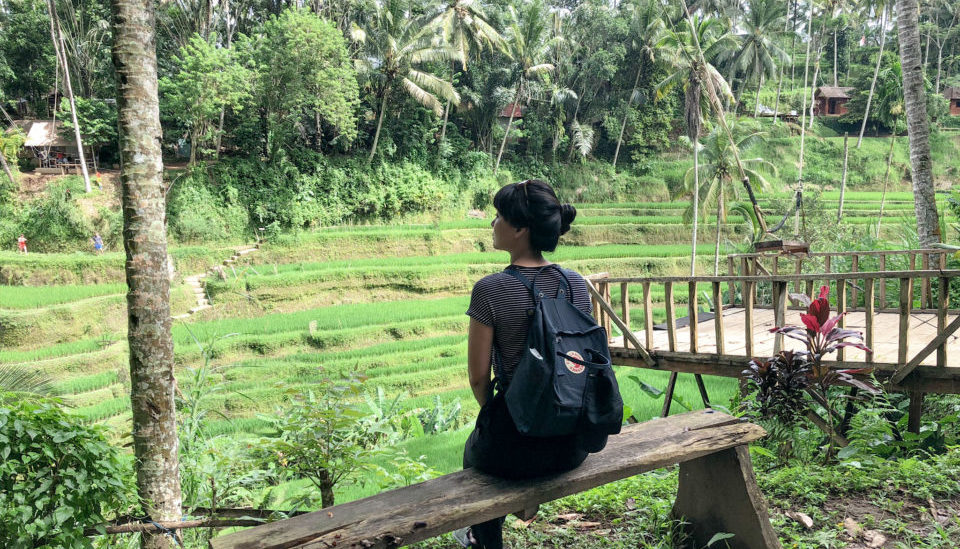 When I was in Indonesia in 2019, I learned that on the island of Bali alone, the suitability for rice paddy production has decreased 20% in the last 20 years due to changes in the climate.
Effects of climate change on the food supply
With climate change comes increased droughts, increased floods, and increased temperature which reduces the harvest’s productivity drastically. In the long term, this leads to increased water vapor in the atmosphere. The subsequent consequence of this is heavy downpours. These heavy downpours cause soil erosion. In turn, soil erosion diminishes good soil needed for harvest. This, along with other factors, is impacting our food supply worldwide.
On average, since 1995, grain productivity has come down to about 1.2%, with the world’s population growth also at 1.2%. A dead heat. We are producing as much grain as we are producing people. According to the United Nations Department of Economic and Social Affairs, the world’s population could increase to 9.7 billion people by 2050, compared to today’s 7.8 billion.
We have a growing population who want to eat meat, diminishing agricultural returns, and worldwide erosion taking 1% a year of the global soil and half a percent of our arable land. Then there is urban expansion, which is nearly always in fertile river plains, taking the best arable land and concreting it over – calculated to be about two and a half million acres a year. Plus, there are water availability problems. Reservoirs in South Africa, Morocco, Spain, and the US, are all shrinking, all suffering from the increased heat. We’re depleting our aquifers: in heavily irrigated areas such as Las Vegas or the Central Valley of California, well water levels have fallen by hundreds of feet. In China, parts of Beijing are sinking by four inches a year. Over half a billion people globally totally depend on underground, very finite aquifers for their water and food.
Agriculture is affected by climate change and it contributes to climate change. It is where climate change has its most consequential effects. It is also the key to our future success or failure. Food sufficiency will prove to be one of our civilization’s greatest future challenge.
How can we tackle this challenge?
The Food and Agriculture Organization is promoting sustainable practices in various countries through agroecology. This is a series of social and environmental measures aimed at creating a sustainable agricultural system that optimizes and stabilizes crop yields. These practices also tackle the effects of climate change, such as desertification, the rise in sea levels, and practices that respect natural cycles while drastically reducing human impact.
In FDR’s words: ‘A nation that destroys its soil destroys itself.’